
The Japanese bistro set aesthetic transcends simple design; it’s a carefully curated blend of traditional Japanese principles and contemporary bistro charm. This style, often characterized by natural materials and minimalist forms, invites a sense of tranquility and refined elegance. It’s a unique approach to interior design, drawing inspiration from both the warmth of a cozy bistro and the serene spirit of Japanese aesthetics.
This exploration delves into the core elements of the Japanese bistro set aesthetic, examining its defining features, from the selection of furniture and colors to the integration of cultural symbolism. We’ll also analyze its historical roots and consider its potential future trends in interior design.
Defining the Aesthetic
The “Japanese bistro set aesthetic” blends the cozy, intimate ambiance of a traditional bistro with the refined simplicity and cultural richness of Japanese design. This style isn’t merely a fusion; it’s a thoughtful curation of elements, creating a unique and welcoming atmosphere. This aesthetic emphasizes understated elegance, fostering a sense of serenity and understated sophistication.This aesthetic transcends a mere collection of design elements.
It embodies a philosophy of mindful living, integrating natural beauty and thoughtful craftsmanship into every detail. It’s a fusion of modern comfort and traditional Japanese aesthetics, evoking a sense of quietude and understated luxury.
Key Visual Elements
This aesthetic is characterized by a meticulous balance of form and function. Key visual elements include the use of natural materials like wood, bamboo, and stone; warm, neutral color palettes; and the incorporation of Japanese-inspired motifs, such as subtle patterns or minimalist artwork. These elements collectively contribute to a sense of calm and understated elegance.
Historical Context and Influences
The Japanese bistro set aesthetic draws inspiration from the evolution of Japanese design principles, particularly from minimalism and the principles of Zen. These principles prioritize simplicity, functionality, and the harmonious integration of objects with the surrounding environment. This aesthetic reflects a contemporary interpretation of these principles, adapting them to the comfort and conviviality of a bistro setting. The modern influence is evident in the integration of clean lines and contemporary materials.
Color Palettes
Common color palettes in this aesthetic often revolve around natural tones. Earthy browns, warm beiges, muted greens, and deep grays are frequently used to create a sense of serenity and harmony. Accents of charcoal, indigo, and deep reds add depth and visual interest, drawing inspiration from traditional Japanese color schemes.
Material Choices
This style frequently utilizes natural and sustainable materials. Wood, bamboo, and stone are common choices for furniture and surfaces. Natural fibers like linen and cotton are often used for textiles, further emphasizing the connection to nature. These materials contribute to a sense of warmth and authenticity, key components of this aesthetic.
Comparison with Other Styles
| Aesthetic | Japanese Bistro Set | Japanese Minimalism | Modern Farmhouse |
|---|---|---|---|
| Color Palette | Earthy neutrals with subtle accents | Monochromatic or muted tones | Warm neutrals, whites, and natural wood tones |
| Material Focus | Natural materials (wood, bamboo, stone) | Clean lines, often using high-quality materials (stone, metal, wood) | Natural wood, stone, and reclaimed materials |
| Space Ambiance | Intimate, welcoming, comfortable | Clean, serene, and spacious | Rustic, comfortable, and inviting |
| Motifs | Subtle Japanese motifs | Often feature Japanese artwork | Simple farmhouse designs |
The table above illustrates the key differences in color palettes, material choices, and overall ambiance. While all styles share an appreciation for design and functionality, the Japanese bistro set aesthetic blends the comfort of a bistro with the understated elegance of Japanese design.
Furniture and Design Elements
The Japanese bistro aesthetic blends the minimalist elegance of Japanese design with the convivial atmosphere of a bistro. This fusion translates into spaces that are both sophisticated and welcoming, drawing inspiration from traditional Japanese craftsmanship while incorporating contemporary comfort. Key elements in achieving this aesthetic revolve around carefully chosen furniture pieces, thoughtful lighting, and the overall spatial arrangement.The furniture selection plays a critical role in establishing the ambiance.
It prioritizes functionality and visual harmony, often employing natural materials and simple, clean lines to reflect the core principles of Japanese design. This creates a sophisticated yet relaxed atmosphere that is perfect for enjoying meals and conversation.
Typical Furniture Pieces
Furniture pieces in a Japanese bistro setting often feature a blend of traditional Japanese elements and modern functionality. Expect to see low tables, often made of natural wood, to encourage interaction and a sense of community. Matching chairs, with simple lines and comfortable seating, complete the look. Additionally, floor cushions or ottomans can be incorporated for added comfort and a touch of Japanese tradition.
Storage solutions like low, open shelving units or built-in cabinets, also made of natural wood, complement the aesthetic while providing practical storage.
Specific Furniture Examples
Examples of specific furniture pieces that embody this aesthetic include low, round wooden tables, crafted from light oak or cherry wood. Matching wooden chairs, with simple, curved backs and slightly tapered legs, create a sense of effortless elegance. Comfortable floor cushions or ottomans, often covered in natural fabrics like linen or cotton, provide alternative seating options.
Shapes, Sizes, and Proportions
Furniture in this aesthetic often adheres to principles of minimalism and proportion. Shapes are typically simple and organic, avoiding overly ornate designs. Sizes are often scaled to create a sense of balance and visual harmony within the space. Low tables and chairs create a relaxed atmosphere, while the proportions of each piece are carefully considered to avoid visual clutter.
Lighting and Ambiance
Ambient lighting is crucial in setting the mood of a Japanese bistro. Soft, diffused lighting, often achieved with warm-toned LED lighting or strategically placed paper lanterns, creates a welcoming and intimate atmosphere. Natural light, when available, is also highly valued, enhancing the space’s connection to the outdoors. A mix of ambient and task lighting can ensure optimal visibility without disrupting the overall ambiance.
Consider using warm-toned lighting, such as Edison bulbs or similar warm-white fixtures, to achieve the desired aesthetic.
Furniture Design for Japanese Bistro
This set of furniture pieces embodies the Japanese bistro aesthetic:
- Low Table: Round, 36 inches in diameter, crafted from natural oak wood with a smooth, natural finish. Height: 18 inches. This promotes interaction and a sense of community.
- Matching Chairs: Four chairs with simple, curved backs and slightly tapered legs. Made of the same natural oak wood as the table. Seat height: 17 inches. Back height: 24 inches. This reinforces the minimalist design theme.
- Floor Cushions: Two large floor cushions, 30 inches in diameter, covered in natural linen fabric. This provides an alternative seating option and reflects the Japanese tradition of floor seating.
- Low Shelving Unit: Open shelving unit, 48 inches wide, 18 inches deep, and 30 inches tall, made of natural oak wood. This integrates storage while complementing the aesthetic.
Seating Arrangements
| Arrangement Type | Description | Ideal Use Case |
|---|---|---|
| Intimate Grouping | Two low tables with matching chairs clustered together. | Couples, small groups |
| Community Gathering | A larger low table surrounded by multiple chairs and floor cushions. | Family dinners, business meetings, or social gatherings |
| Bar-Style Seating | A low counter with bar stools for communal interaction and relaxed conversations. | Quick meals, casual gatherings, or for those who want a more bar-like atmosphere |
Color Palette and Texture
The Japanese bistro aesthetic, drawing inspiration from traditional Japanese design principles, often relies on a calming color palette and carefully selected textures to create a serene and inviting atmosphere. This approach prioritizes natural elements and a sense of understated elegance. The palette, though often muted, possesses a depth that evokes a sense of tranquility and connection to nature.The color choices, far from being arbitrary, are deeply rooted in Japanese cultural symbolism and aesthetics.
These subtle hues, combined with the textures, contribute to a refined ambiance that distinguishes the Japanese bistro from other café styles. The tactile experience plays a crucial role in reinforcing the desired emotional response.
Typical Color Palette
The color palette generally leans towards warm neutrals and earthy tones. Muted tones of beige, cream, light gray, and subtle shades of brown and taupe are prevalent. These colors evoke a sense of calm and comfort, mimicking the natural world. Accents of deep, rich green, soft blue, or muted coral are used sparingly to add visual interest without disrupting the overall harmony.
A touch of deep indigo or charcoal can be used as a focal point.
Color Evocation
Specific colors play a key role in conveying the desired aesthetic. For instance, soft beiges and creams evoke a sense of warmth and hospitality, while muted grays suggest a quiet elegance. Deep greens, inspired by Japanese gardens, represent nature’s tranquility. The subdued use of contrasting colors creates a sophisticated yet relaxed atmosphere. For example, a deep indigo accent wall can create a focal point without overwhelming the space.
Role of Texture
Texture significantly enhances the overall ambiance of the space. It adds depth and visual interest, contributing to a tactile experience that complements the visual appeal of the color palette. The interplay of smooth and rough textures, warm and cool textures, and the integration of natural materials all work together to establish the atmosphere.
Common Textures
Natural materials such as wood grain, bamboo, and linen are frequently employed. The warmth of natural wood, whether in furniture, flooring, or decorative accents, is a key component. Linen, with its soft texture and subtle drape, creates a sense of comfort and luxury. The use of natural materials evokes a connection to nature and the surrounding environment.
For example, a linen tablecloth draped over a wooden table provides a comforting and aesthetically pleasing touch.
Impact of Natural Light
Natural light plays a critical role in shaping the atmosphere of a Japanese bistro. Large windows or strategically placed skylights allow natural light to filter through the space, enhancing the ambiance and making the space feel airy and welcoming. Soft, diffused natural light contributes to the overall serenity and enhances the subtle hues of the color palette. The light also highlights the natural textures, such as the grain of the wood or the drape of the linen.
Color Combinations
| Color Combination | Atmosphere |
|---|---|
| Beige/Cream/Light Gray with Deep Green Accents | Serene and Inviting |
| Taupe/Brown with Muted Coral or Peach | Warm and Relaxed |
| Cream/Light Gray with Charcoal or Indigo | Sophisticated and Elegant |
| Beige/Cream with Soft Blue Accents | Calming and Tranquil |
Accessories and Decor
The Japanese bistro aesthetic, with its emphasis on understated elegance and natural harmony, relies heavily on carefully chosen accessories and decor elements to evoke a sense of tranquil ambiance. These items, often imbued with traditional Japanese design principles, are not merely decorative; they contribute significantly to the overall atmosphere and storytelling of the space.The meticulous curation of accessories and decor is crucial in establishing the authentic Japanese bistro aesthetic.
From the delicate artistry of ceramics to the serene presence of natural elements, each piece contributes to the overall harmony and cultural resonance of the space. This attention to detail creates an inviting atmosphere, encouraging patrons to engage with the environment on a deeper level.
Typical Accessories and Decor Elements
This aesthetic often features understated elegance and carefully curated items. Ceramics, often featuring minimalist designs or subtle patterns, are prevalent. Woven baskets, in natural materials like bamboo or rattan, add texture and a sense of rustic charm. These elements complement the overall natural theme, fostering a serene and inviting atmosphere.
Examples of Complementary Accessories
Numerous accessories complement the aesthetic. Hand-painted ceramic teacups and bowls, crafted with intricate patterns, can be strategically placed on tables or shelves. Intricately woven bamboo placemats and coasters add texture and a touch of natural beauty. Small, meticulously crafted wooden sculptures or miniature garden landscapes, in the Japanese style, provide subtle points of interest. The selection should prioritize quality and simplicity over ostentation.
Role of Plants and Greenery
Plants and greenery play a vital role in fostering a sense of tranquility and connection with nature. Low-maintenance plants like bonsai trees, ferns, or bamboo stalks are excellent choices. These elements, often strategically placed on shelves or tables, bring a sense of life and vibrancy to the space. Their presence also subtly alludes to the Japanese appreciation for nature and its restorative qualities.
Significance of Natural Elements
Natural elements are paramount to the aesthetic. Wooden accents, like small tables or shelving units, bring warmth and a sense of grounded simplicity. The use of natural materials like stone or wood for decorative elements further strengthens the connection to nature. Incorporating natural light as much as possible enhances the space’s overall tranquility.
Incorporating Traditional Japanese Art
Traditional Japanese art forms, such as calligraphy scrolls, prints (ukiyo-e), or miniature landscapes (bonsai), can be subtly integrated into the decor. These pieces, often displayed on walls or shelves, add cultural depth and a touch of artistic flair. Careful selection is key, ensuring the chosen pieces align with the overall aesthetic and do not overwhelm the space.
Table Setting Showcase
A table showcasing accessories that enhance this aesthetic might include:
| Item | Description | Aesthetic Contribution |
|---|---|---|
| Hand-painted ceramic teacups and bowls | Set of 4 teacups and 4 matching bowls | Subtle artistry, complementing the Japanese aesthetic. |
| Woven bamboo placemats and coasters | Set of 4 placemats and 4 coasters | Natural texture, adds a sense of warmth. |
| Small wooden sculpture of a crane | Hand-carved wooden sculpture | Traditional Japanese imagery, subtle cultural touch. |
| Small bonsai tree | Low-maintenance, compact bonsai tree | Natural element, bringing life and tranquility. |
| Small ceramic vase with dried flowers | Elegant, minimalist vase with dried flowers | Adds a touch of serenity and visual interest. |
The overall effect should be one of understated elegance, emphasizing quality over quantity, and drawing inspiration from nature’s beauty.
Space Planning and Layout
The Japanese bistro aesthetic, rooted in minimalism and a reverence for natural elements, demands thoughtful space planning. Careful consideration of layout, flow, and the strategic use of negative space are crucial for achieving the desired ambiance of serenity and sophistication. Openness and a sense of spaciousness are paramount, achieved through well-defined zones and a thoughtful use of natural light.The typical layout emphasizes a balance between intimate and communal seating areas.
This duality creates a welcoming atmosphere that caters to both solo diners and groups, while maintaining a sense of exclusivity. The focus is on creating zones of calm, not overcrowding or overstimulation. The goal is to foster a sense of tranquility and encourage lingering conversations, not just hurried meals.
Typical Layout and Organization
The layout prioritizes a sense of calm and flow. Often, the space is divided into distinct zones, such as a bar area for drinks and appetizers, a dining area for meals, and potentially a small lounge or waiting area. Careful consideration of traffic flow is essential to ensure smooth movement between these zones. The use of strategically placed dividers, like low partitions or plants, can create a sense of enclosure without hindering the overall spaciousness.
A well-defined bar area with counter seating fosters a relaxed and interactive environment.
Creating Openness and Flow
Open layouts, with ample space between tables and furniture, are key to achieving a sense of spaciousness. Large, uncluttered spaces and a lack of visual obstructions are key elements. A seamless transition between different zones—dining, bar, and potentially a small lounge—is often achieved with similar color palettes and materials. Consider the use of low, wide tables for dining, which promote interaction and encourage a sense of community.
Floor-to-ceiling windows and well-placed lighting can also contribute to the sense of openness.
Role of Negative Space
Negative space, or the empty space surrounding elements, is critical. It provides breathing room, allowing the design to feel less cluttered and more refined. A thoughtful approach to negative space contributes to the overall aesthetic, emphasizing simplicity and calm. Furniture arrangement should prioritize visual space, not just functional use.
Natural Light and Ventilation
Natural light and ventilation are essential elements. Floor-to-ceiling windows, strategically placed skylights, and well-ventilated areas enhance the ambiance. Natural light not only brightens the space but also connects it to the outdoors, creating a sense of harmony with nature. Careful consideration of the direction and amount of sunlight is essential to maximize its benefits while minimizing glare.
Floor Plan for a Space
 A floor plan, while simplified, is a representation of the Japanese bistro space. The layout encompasses a reception/waiting area, bar counter, dining area, and potential lounge area. It features an open-concept layout with a central focal point, a large communal table for groups. The layout promotes interaction and conversation while maintaining a sense of calm and spaciousness.
Sample Space Dimensions and Arrangements
| Area | Dimensions (Length x Width) | Arrangement |
|---|---|---|
| Reception/Waiting Area | 10 ft x 15 ft | Low seating, plants, small tables |
| Bar Area | 15 ft x 8 ft | Counter seating, bar stools, well-lit |
| Dining Area | 20 ft x 25 ft | Low tables, spaced chairs, comfortable lighting |
| Lounge Area | 10 ft x 12 ft | Sofas, low tables, relaxed ambiance |
The table above provides a general overview of the dimensions and arrangements. The specific measurements can be adjusted based on the space’s dimensions and the desired number of seating arrangements.
Mood and Atmosphere
The Japanese bistro aesthetic cultivates a serene and inviting atmosphere, drawing inspiration from traditional Japanese design principles to foster a sense of tranquility and well-being. This carefully curated environment aims to transport patrons to a tranquil haven, promoting relaxation and connection through the harmonious blend of design elements.This aesthetic strives to evoke a sense of calm and tranquility through thoughtful consideration of textures, lighting, and the overall ambiance.
The subtle use of natural materials and soft color palettes, combined with strategically placed lighting fixtures, creates a soothing and comforting environment, perfect for intimate gatherings or quiet moments of reflection.
Desired Mood and Atmosphere
This aesthetic aims to create a serene and inviting atmosphere, evoking a sense of tranquility and well-being. The ambiance is intended to be both calming and engaging, encouraging connection and conversation. The space should feel warm and welcoming, yet also sophisticated and refined.
Creating Calmness and Tranquility
The aesthetic achieves calmness and tranquility through a meticulous approach to design. Natural materials, such as wood and bamboo, are prominent features, evoking a connection to nature. Soft color palettes, often featuring muted tones like beige, cream, and sage green, further contribute to a sense of serenity. Strategic placement of natural light and carefully chosen lighting fixtures creates a soft, diffused glow, minimizing harsh shadows and promoting a sense of peacefulness.
Music and Sounds
The selection of music plays a critical role in enhancing the overall mood. Gentle, ambient music with Japanese instrumentation, such as koto or shakuhachi, is ideal. Soft, melodic jazz or classical music can also be appropriate, depending on the specific atmosphere desired. The soundscape should be unobtrusive yet evocative, complementing the visual serenity. Natural sounds, like the gentle murmur of a water feature, can also contribute to the calming effect.
Overall Ambiance and Feel
The overall ambiance is characterized by a delicate balance between sophistication and simplicity. The aesthetic aims to evoke a sense of understated elegance, reflecting the Japanese appreciation for natural beauty and minimalist design. Warm, inviting lighting creates a welcoming atmosphere without overwhelming the senses. The combination of carefully chosen furniture, soft textures, and ambient sounds creates a space that feels both serene and stimulating, encouraging relaxation and conversation.
Impact of Textures and Lighting
The careful selection of textures and lighting significantly impacts the overall mood. Soft fabrics, such as linen and cotton, combined with smooth, polished surfaces, contribute to a tactile experience that promotes a sense of comfort and well-being. The use of warm, diffused lighting, such as pendant lights or strategically placed lamps, creates a cozy and inviting atmosphere, minimizing harsh shadows and creating a welcoming ambiance.
Encouraging Relaxation and Well-being
The Japanese bistro aesthetic is designed to encourage relaxation and well-being through its emphasis on serenity and natural elements. The combination of soothing colors, soft textures, and carefully selected music creates a space where patrons can unwind, connect with others, or simply enjoy a moment of peace. The environment aims to foster a sense of calm and tranquility, promoting a positive and restorative experience.
Materials and Craftsmanship
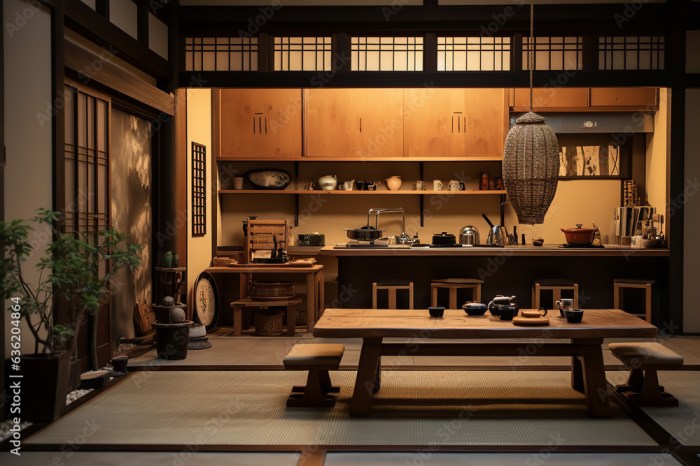
A Japanese bistro, imbued with its distinct aesthetic, demands meticulous attention to materials and craftsmanship. The essence of this style often hinges on the careful selection of natural elements and the skillful execution of traditional techniques, reflecting a deep respect for the materials themselves. These choices contribute significantly to the overall atmosphere, fostering a sense of tranquility and authenticity.The Japanese bistro aesthetic prioritizes materials that evoke a sense of warmth, serenity, and connection to nature.
Craftsmanship, rather than mere aesthetics, is paramount. The quality and care taken in the creation of each piece is as important as the design itself. This philosophy elevates the experience beyond a mere meal and into an immersive cultural immersion.
Common Materials
The core materials employed in Japanese bistro design frequently include natural wood, such as meticulously crafted cherry, maple, or bamboo. These materials are selected for their inherent beauty, durability, and subtle warmth. The use of natural stone, particularly polished slate or granite, for countertops or flooring elements is also quite common, bringing a sense of understated elegance and sophistication.
Importance of Craftsmanship
The meticulous attention to detail and quality of construction are critical in the Japanese bistro aesthetic. This extends beyond the mere selection of materials to encompass the precision and skill of the artisans who shape and assemble them. Hand-crafted elements, whether it’s the joinery of furniture or the intricate detailing of accessories, underscore the respect for tradition and dedication to excellence.
This focus on craftsmanship elevates the everyday into a refined experience.
Sustainable Materials
The growing awareness of environmental responsibility is reflected in the design of modern Japanese bistros. Sustainable materials, such as reclaimed wood or bamboo, are increasingly incorporated to reduce the environmental impact of construction and decoration. For example, reclaimed wood brings a unique character and history to the space, while bamboo’s rapid growth makes it an environmentally friendly option.
Natural Materials
The integration of natural materials is fundamental to the Japanese bistro aesthetic. Natural textures and patterns are highly valued. Woven textiles, such as natural linen or ramie, can be incorporated into upholstery or curtains, enhancing the sense of connection to the environment. The use of natural stone adds a touch of earthiness and serenity. This integration with nature is key to establishing the space’s unique ambience.
Material Comparison
| Material | Aesthetic Impact | Sustainability Considerations |
|---|---|---|
| Reclaimed Wood | Adds a unique character and history; rustic, warm, and inviting | Reduces waste; often sourced from ethically harvested wood |
| Bamboo | Elegant, lightweight, and durable; adds a touch of modern sophistication | Rapid growth; environmentally friendly |
| Natural Stone (Slate/Granite) | Subtle elegance; understated sophistication; adds a touch of earthiness | Durable; sourced ethically and responsibly |
| Natural Linen/Ramie | Adds warmth and texture; natural, comfortable, breathable | Renewable resources; often sustainably harvested |
| Cherry Wood | Rich, warm tones; exquisite beauty; timeless | If sustainably sourced, minimal environmental impact |
Cultural Significance
The Japanese bistro aesthetic draws deeply from centuries of cultural tradition, translating core principles of Japanese design and hospitality into a modern, inviting framework. This fusion creates an atmosphere that is both familiar and fresh, appealing to a global audience while maintaining a strong connection to its roots. The aesthetic speaks to the Japanese philosophy of mindful living and the art of creating welcoming spaces.The aesthetic embodies traditional Japanese design principles, including a focus on simplicity, harmony, and the use of natural materials.
This approach is deeply rooted in the country’s rich history, evolving through centuries of artistic refinement. The use of natural light, uncluttered spaces, and understated elegance all contribute to a sense of tranquility and balance, reflecting the Japanese pursuit of aesthetic perfection.
Traditional Japanese Design Principles
Japanese design principles, often rooted in Zen Buddhism, emphasize harmony with nature and a deep appreciation for simplicity. These principles translate directly into the design choices, from the selection of materials to the arrangement of furniture. The concept of
wabi-sabi*, appreciating the beauty of imperfection and impermanence, is evident in the subtle textures and understated elegance of the aesthetic.
Japanese Cultural Motifs
The use of Japanese cultural motifs, such as cherry blossoms, bamboo, and the iconictorii* gate, often appears in subtle, understated ways. These motifs, steeped in symbolism, evoke a sense of tranquility and connection to nature. For example, bamboo, symbolizing strength and flexibility, is often incorporated through its visual representation in the design or the use of bamboo-inspired textures.
Cherry blossoms, representing the ephemeral beauty of life, are often depicted in subtle ways, adding a touch of seasonal charm to the overall design.
Historical Context
The aesthetic draws on the historical context of Japanese design, particularly the evolution of tea ceremonies and traditional homes. The emphasis on simplicity and the use of natural materials in these settings has profoundly influenced the current aesthetic. The concept of
machiya*, traditional merchant houses, often featured open-plan living spaces and careful consideration of light and space, reflecting an appreciation for practicality and beauty.
Relationship to Japanese Hospitality
The Japanese bistro aesthetic directly connects to the Japanese concept ofomotenashi*, the art of hospitality. This concept extends beyond simply providing excellent service; it involves creating a welcoming atmosphere that respects and values the guest. The thoughtful design choices, from the color palette to the layout of the space, contribute to a sense of warmth and comfort, ensuring that guests feel truly valued and appreciated.
This aspect of the aesthetic is deeply rooted in Japanese culture, ensuring a welcoming experience for every guest.
Connection Between Design Elements and Japanese Culture
| Design Element | Cultural Connection |
|---|---|
| Natural Materials (wood, bamboo, stone) | Deep connection to nature, reflecting the
|
| Simple, uncluttered spaces | Emphasizes mindfulness and tranquility, aligned with Zen principles and a preference for simplicity. |
| Neutral color palettes (earth tones) | Reflects a harmony with nature and the appreciation for subtle beauty, often seen in traditional Japanese gardens. |
| Emphasis on natural light | Symbolizes openness, clarity, and connection to the natural world, reflecting Japanese appreciation for natural beauty. |
| Subtle use of cultural motifs (cherry blossoms, bamboo) | Evoke a sense of serenity, tradition, and connection to nature, adding a layer of cultural significance to the design. |
Inspiration and Sources
The Japanese bistro set aesthetic draws inspiration from a rich tapestry of cultural influences, blending contemporary comfort with traditional Japanese design principles. This fusion creates a unique atmosphere, characterized by understated elegance and a focus on natural materials and thoughtful space planning.
The aesthetic is not simply a replication of historical styles but a modern interpretation, reflecting evolving tastes and a globalized design landscape.
Sources of Inspiration
The aesthetic is rooted in the principles of Japanese minimalism, often referred to as “wabi-sabi.” This philosophy emphasizes the beauty found in imperfection, natural materials, and the ephemeral nature of things. This philosophy, combined with the practicality and efficiency often found in bistro-style settings, yields a space that is both visually appealing and functional. Beyond this core philosophy, influences extend to traditional Japanese gardens, with their careful use of space and emphasis on harmony with nature.
Furthermore, the aesthetic borrows from contemporary Japanese design, which often incorporates clean lines and a focus on craftsmanship.
Specific Artists, Designers, and Historical Periods
The aesthetic is not directly tied to a single artist or designer. Instead, it draws on a confluence of design principles and historical periods. The work of renowned Japanese architects, like Tadao Ando, whose buildings often feature natural light and simple forms, is a subtle yet strong influence. Similarly, the minimalist designs of mid-century modern furniture, popular in the United States and Europe, also offer inspiration, with a focus on functionality and clean lines that complements the Japanese sensibilities.
Evolution of the Aesthetic
The Japanese bistro set aesthetic is a contemporary evolution. Early forms of Japanese interior design, characterized by a focus on natural materials and spatial harmony, laid the groundwork. This was further refined through the development of traditional Japanese furniture, often crafted from wood and emphasizing simplicity and natural beauty. The aesthetic’s evolution reflects a continuous adaptation to contemporary living, while retaining core principles of simplicity, functionality, and the integration of natural elements.
Influence of Different Cultures
The style is not isolated; it is influenced by the integration of Western bistro culture with the Japanese aesthetic. The emphasis on practicality and efficiency in bistro settings is balanced with the Japanese emphasis on natural beauty and understated elegance. This harmonious combination results in a unique blend that resonates with contemporary tastes. Elements of Scandinavian design, with its focus on clean lines and natural materials, also subtly influence the aesthetic, further contributing to its universal appeal.
Specific Examples of Japanese Bistro Sets
While a precise “Japanese bistro set” does not exist as a commercially recognized category, examples can be found in contemporary furniture lines incorporating these design elements. Often, these sets showcase minimalist designs, using light woods, natural fibers, and clean lines. The use of bamboo or other light woods is common, as are subtly incorporated traditional Japanese patterns or motifs in the design or upholstery.
The focus is on functional pieces that complement the overall minimalist aesthetic, seamlessly blending comfort and elegance.
Inspirations Table
| Inspiration Category | Specific Examples |
|---|---|
| Japanese Aesthetics | Wabi-sabi, minimalist design principles, traditional Japanese gardens, use of natural materials |
| Western Bistro Culture | Practicality, efficiency, informal dining setting, casual elegance |
| Contemporary Design | Clean lines, natural materials, emphasis on functionality, modern interpretations of traditional Japanese aesthetics |
| Historical Periods | Mid-century modern, Scandinavian design, traditional Japanese furniture styles |
Visual Representations
The visual manifestation of a Japanese bistro aesthetic hinges on evoking a sense of warmth, sophistication, and understated elegance. Successful implementations utilize carefully curated color palettes, lighting strategies, and compositions that mirror the tranquility and artistry of Japanese design principles. This section will explore exemplary visual representations, highlighting the successful application of the aesthetic elements previously discussed.
Color Palette and Light Applications
A crucial aspect of visual representation involves the skillful use of color and light. The color palette, typically grounded in muted tones, often incorporates shades of beige, cream, deep browns, and subtle hints of teal or indigo. Strategic use of natural light, often filtered through sheer curtains or paper screens, creates a soft, diffused ambiance. Accent lighting, perhaps in the form of warm-toned Edison bulbs or carefully placed lanterns, adds depth and texture to the space.
Composition and Spatial Arrangements
Successful implementation emphasizes thoughtful spatial arrangements, drawing inspiration from Japanese principles of minimalism and harmony. Visual examples showcase the strategic use of negative space, creating a sense of serenity and spaciousness. Furniture placement, often arranged around a central focal point, encourages interaction and conversation without overwhelming the space. Elements like low tables and comfortable seating arrangements foster a relaxed and intimate atmosphere.
Examples of Successful Implementations
| Category | Visual Description | Color & Light | Composition & Arrangement |
|---|---|---|---|
| Modern Japanese Bistro | A contemporary bistro featuring minimalist wooden furniture with clean lines. Exposed brick walls or natural stone accents provide a backdrop to the space. | Warm, neutral color palette with pops of deep indigo or emerald green. Ambient lighting combined with strategically placed spotlights highlight key architectural elements and showcase the food. | Open layout with distinct seating areas. Low tables and comfortable chairs encourage interaction. The space is balanced with the use of negative space, creating a sense of calm. |
| Traditional Japanese Tea House Bistro | A space inspired by traditional Japanese teahouses. Tatami mats or low wooden benches are prominent features, and walls might incorporate traditional Japanese paper screens. | Muted tones of beige, brown, and cream. Natural light filtered through shoji screens or paper panels creates a soft, diffused glow. Warm, indirect lighting adds depth to the space. | Seating arrangements are low to the ground, encouraging conversation and a sense of community. The placement of the tables and seating is carefully planned to optimize space. |
| Industrial-Inspired Japanese Bistro | An industrial-style bistro with exposed beams, concrete floors, and metal accents. Traditional Japanese elements, such as shoji screens or wood accents, are subtly integrated. | Darker, more industrial-inspired color palette with warm wood accents. Lighting might include a mix of industrial-style pendant lights and warm, ambient lighting. | The open space allows for a sense of openness and visual connection. Seating is often arranged in clusters or around low tables. |
Illustrative Visual Examples
Numerous interior design magazines and online platforms showcase the successful implementation of this aesthetic. For instance, a magazine like “Architectural Digest” frequently features examples of restaurants and cafes that adopt elements of Japanese design principles, including the careful use of natural materials, soft color palettes, and ambient lighting. In these examples, the focus is often on creating a serene and inviting atmosphere, emphasizing the visual harmony and tranquility associated with Japanese design.
A key characteristic is the integration of natural materials, such as wood and bamboo, that complement the space’s minimalist style.
Specific Design Elements in Examples
The use of natural materials, such as bamboo and wood, is often a defining element. The warm tones of these materials are frequently complemented by muted colors and a minimalist approach to furniture. Lighting plays a crucial role, creating a warm and inviting atmosphere while highlighting the natural beauty of the space. Traditional Japanese design elements, like shoji screens or lanterns, may be subtly integrated, adding depth and cultural resonance.
Future Trends
The Japanese bistro aesthetic, with its emphasis on refined simplicity, artisanal craftsmanship, and a touch of traditional Japanese design, is poised for continued evolution. This aesthetic’s enduring appeal lies in its adaptability, allowing it to seamlessly integrate with emerging design trends while retaining its core values. From incorporating sustainable materials to leveraging technology for enhanced dining experiences, the future of this style promises exciting transformations.This section explores potential future developments, identifying emerging design elements and trends, and projecting how this aesthetic might evolve, considering the influence of modern trends and potential new applications.
Potential Future Directions
The Japanese bistro aesthetic’s ability to blend traditional Japanese elements with contemporary design principles makes it adaptable to future trends. Expect a greater emphasis on sustainability, as consumers increasingly seek environmentally conscious products and practices. This will manifest in the use of reclaimed wood, recycled metals, and locally sourced materials.
Emerging Design Elements
Several emerging design elements are poised to influence the Japanese bistro aesthetic. These include a heightened focus on biophilic design, incorporating natural elements like exposed wood beams, bamboo accents, and natural stone, creating a strong connection with nature. Furthermore, minimalist lighting design, utilizing ambient and accent lighting, will enhance the sense of calm and tranquility. A growing appreciation for tactile textures will see the incorporation of natural fibers, such as linen and hemp, in furniture and upholstery.
Influence of Modern Trends
Modern trends are significantly impacting the Japanese bistro aesthetic. The increasing demand for personalized experiences will lead to more adaptable and customizable space designs. This personalization might manifest in modular furniture pieces, allowing for flexible arrangements to suit various events and functions. Furthermore, a growing interest in technological integration, such as smart lighting systems and interactive menus, will enhance the overall dining experience.
Potential New Applications
The Japanese bistro aesthetic’s versatility opens up new applications beyond traditional dining establishments. Consider its potential use in residential spaces, creating tranquil and sophisticated living areas. It can also be incorporated into retail spaces, fostering a calm and welcoming atmosphere for customers. Furthermore, it could be employed in hospitality settings, such as boutique hotels or spas, to create a unique and serene ambiance.
Table: Potential Future Directions of the Japanese Bistro Aesthetic
| Trend | Description | Examples |
|---|---|---|
| Sustainability | Increased use of recycled and locally sourced materials, reduced environmental impact | Reclaimed wood furniture, bamboo accents, locally sourced ceramics |
| Biophilic Design | Integration of natural elements, connection with nature | Exposed wood beams, natural stone, living walls, bamboo partitions |
| Personalized Spaces | Modular furniture, customizable elements | Adjustable shelving units, modular tables, custom-designed lighting fixtures |
| Technological Integration | Smart lighting, interactive displays, automated systems | Automated ordering systems, interactive menus, smart lighting control systems |
| Expanded Applications | Beyond restaurants, into residential, retail, and hospitality spaces | Japanese-inspired home interiors, boutique hotels with a zen-like atmosphere, retail spaces with calming decor |
Closing Notes
In conclusion, the Japanese bistro set aesthetic offers a captivating fusion of East and West. By blending traditional Japanese design principles with the relaxed atmosphere of a bistro, it creates a unique space that is both calming and inviting. The meticulous attention to detail, the selection of natural materials, and the emphasis on cultural symbolism combine to create a truly distinctive aesthetic.
Its potential for evolution in the future is certainly intriguing.
